
Gilmer Detention Release Destinations
The Gilmer County Adult Detention Center is the county's main booking and local custody point. A person can leave after bond is satisfied, a judge orders release, a case is dismissed, a jail sentence ends, or time served is credited. The person may also begin probation in the community. In each of those cases, the sheriff's release record should identify the release event, and the court docket can show why custody ended.
Leaving this jail can also mean transfer. Convicted felons awaiting state placement may move to the Georgia Department of Corrections. Another county can take custody on its warrant. Federal authorities or ICE may pick up a person under a hold. These are not community releases. The record should state a transfer destination, and the receiving agency's locator becomes the next place to check.
| Departure | What it means | Best confirmation |
|---|---|---|
| Bond or court order | Community release while the case may continue | Sheriff release record and court docket |
| Time served or sentence complete | County sentence ended | Release record and sentencing disposition |
| Probation | Community release with supervision | Court sentence and Gilmer DCS office |
| GDC transfer | State custody continues | GDC offender search |
| Another jail or federal agency | Custody continues elsewhere | Transfer field and receiving system |
| ICE pickup | Immigration custody may continue | Sheriff transfer record and ICE locator |
Confirm a Gilmer Jail Release
The Gilmer OffenderIndex is the correct first search for this county facility. It has Current Inmates, Bookings Over Last 24 Hours, and Inmates by Booking Date. The 24-hour screen reports bookings, not releases. The booking-date search can include previous inmates and is more useful after a person leaves the live roster.
- Search Current Inmates. A matching current record means the person is still shown in Gilmer jail custody at that time.
- Search the booking-date range around the arrest. Use first and last name filters and select Include Previous Inmates if the option appears.
- Request the sheriff's release record when the person was booked but no longer appears as current.
- Check the court disposition for bond, dismissal, time served, probation, sentence, or another hold.
- Follow a transfer into the receiving system, such as GDC, ICE, another county jail, or BOP after federal commitment.
The full Gilmer County released-inmate search and record field inventory appear on the home page. Online systems may update at different times. When they disagree, rely on the agency responsible for the custody stage in question.
Not shown on the Gilmer current roster does not prove community release. Confirm the release reason and transfer destination.
Gilmer Detention Records Contact
The sheriff's detention materials identify the operational jail at Brett Dickey Memorial Drive. The same detention phone appears in sheriff and GDC sources.
Gilmer County Adult Detention Center106 Brett Dickey Memorial Drive
Ellijay, GA 30536
Phone: 706-635-4625
Fax: 706-635-6625
Gilmer County Sheriff's Office
1 Broad Street, Suite 103
Ellijay, GA 30540
Administration: 706-635-4162
Fax: 706-635-4172
Non-emergency: 706-635-8911
No regular records-lobby hours were documented in the research, so call before visiting. Submit a request with the person's full name, birth date if known, approximate booking date, and booking number if available. Ask for the public book-in report, release date and time, release reason, bond or court-order reference, and any transfer destination.
Gilmer Release Record Costs
The sheriff's open-records form cites O.C.G.A. 50-18-70 et seq. and the fee authority in O.C.G.A. 50-18-71. It lists the first 15 minutes of administrative time as free. Retrieval after that is $23.15 per hour. A book-in report is $2, an incident report is $2, and an accident report is $5. CAD and miscellaneous paper copies are 10 cents per page.
The form says the office has three business days to acknowledge receipt and provide a cost estimate. That period is an initial response window, not a guarantee that every requested record will be produced in three days. Records may contain material withheld under an applicable exception. Booking-photo disclosure also has separate limits under Georgia law.
A narrow request can reduce search time and prevent confusion between people with similar names. Give one booking date or a short date range, and identify the exact fields needed. Release time, release type, bond or court-order reference, and transfer destination are more useful than a vague request for all inmate records. If the result says transfer, ask for the name of the receiving agency. Keep the sheriff's response with the related court record because the two documents answer different parts of the custody history.
About Gilmer Adult Detention
The Adult Detention Center Division page describes a county jail that houses people awaiting trial and people serving court-ordered sentences. Sheriff records add that all people taken into custody in Gilmer County are processed there regardless of the arresting agency. Its files can therefore reflect arrests by sheriff deputies, city police, state patrol, and other agencies operating in the county.
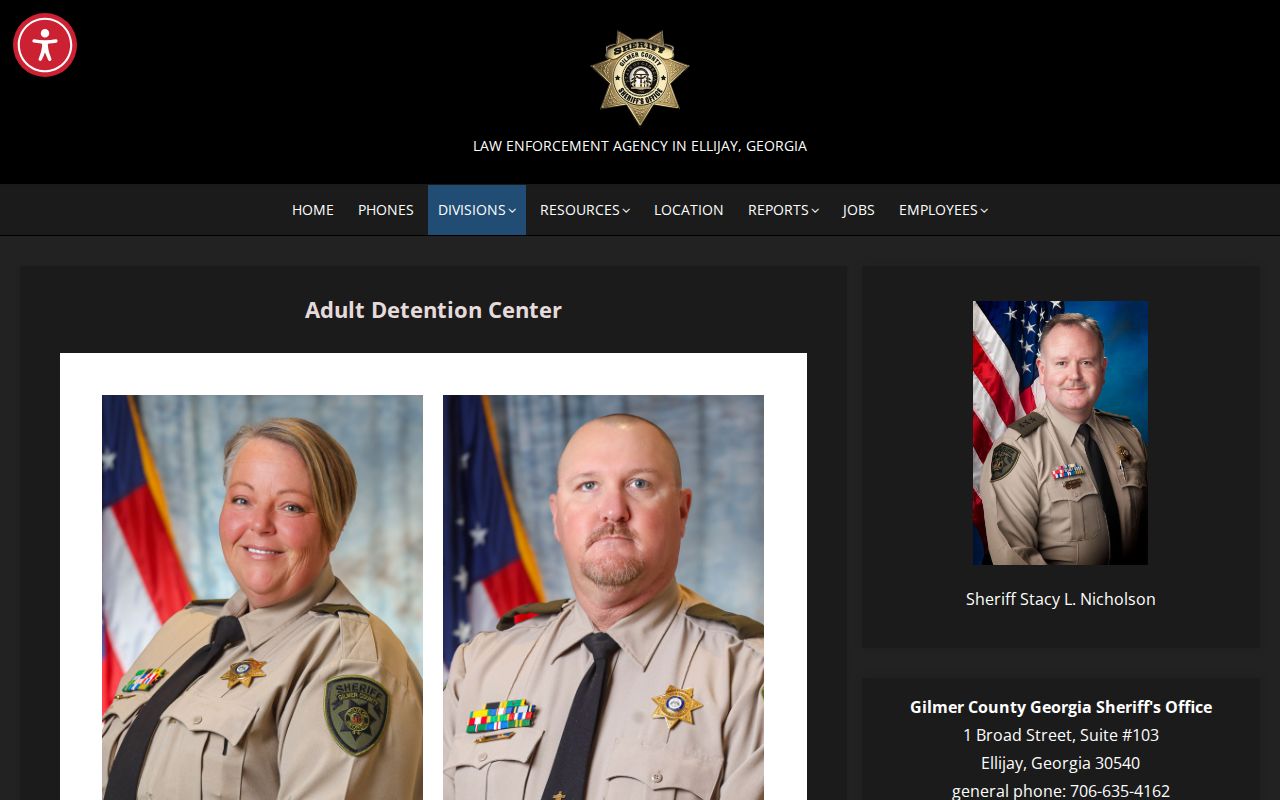
The facility also holds people convicted of misdemeanors for county-jail terms and convicted felons awaiting transfer to state prison. Georgia Code 42-4-7 states that a county inmate sentenced to confinement is released when the sentence expires, less earned-time deductions. The jail and sentencing court determine the actual county release event.
Two Gilmer Jail Addresses
Public sources use two locations for what may be called Gilmer County Jail. Local detention reports identify 106 Brett Dickey Memorial Drive as the Adult Detention Center. The GDC location listing uses “Gilmer County Jail” and gives 1 Broad Street, the sheriff and courthouse administration location. Both sources publish 706-635-4625 as the detention phone.
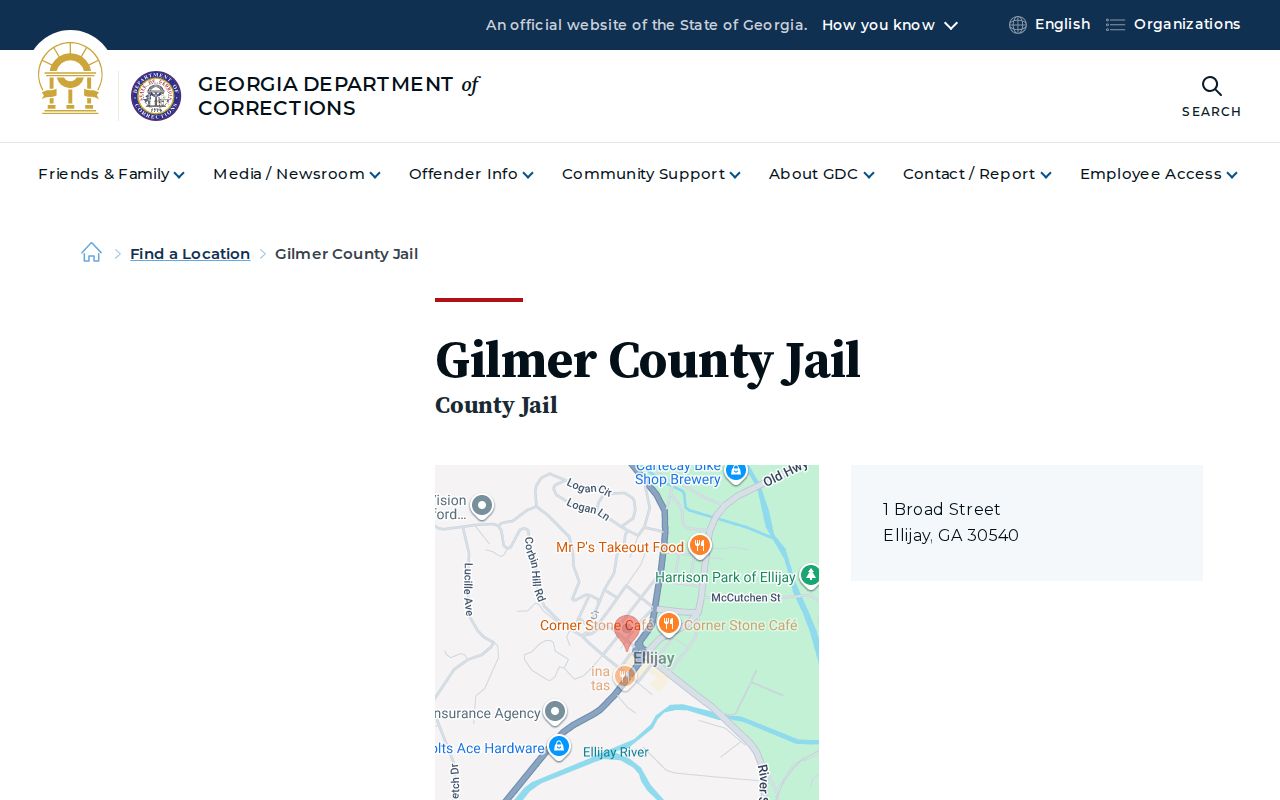
Use Brett Dickey Memorial Drive for the operational detention facility and Broad Street for sheriff administration unless the office directs otherwise. Call before travel or delivery because an agency page may use its administrative mailing location rather than the jail entrance.
Gilmer ICE Transfer Records
Immigration pickup is a documented local release issue. The sheriff's O.C.G.A. 42-4-14 quarterly report for the fourth quarter of 2024 lists 308 bookings, eight ICE detainers, and four pickups. Those figures do not mean that every noncitizen is transferred. They show why a Gilmer release search must distinguish an ICE pickup from release into the community.
When the jail record states an ICE detainer or pickup, use the ICE Online Detainee Locator System. It covers people currently in ICE custody and people who have been in CBP custody for more than 48 hours. Search by A-number when known, or by name with country of birth and birth date. If the locator has not updated, the sheriff's transfer record remains the source for how Gilmer custody ended.
State and Supervision Follow-Up
A state-prison transfer should appear through the GDC offender query. Search by name, GDC ID, case number, conviction county, most recent institution, and active or inactive scope. A GDC match means state custody or a state corrections record, not proof that the person was released from all custody when leaving Gilmer.
For parole or felony probation after release, use the State Board of Pardons and Paroles searches and the Georgia Department of Community Supervision. The Appalachian Circuit source lists the Gilmer County DCS Office at 706-502-8258. Court records remain important because bond, probation, dismissal, and sentence terms can outlast the short public life of a jail-roster entry.
Georgia VINE supplies another custody-status channel and can send custody-change notices for participating records. A notice is useful for prompt awareness, but the sheriff's release document remains the formal local record. For a federal sentence, the Bureau of Prisons locator is the public route after commitment. Federal pretrial custody may instead require federal court records because the U.S. Marshals Service does not maintain a broad public prisoner roster. These boundaries prevent a county-jail lookup from being mistaken for a complete national custody search.